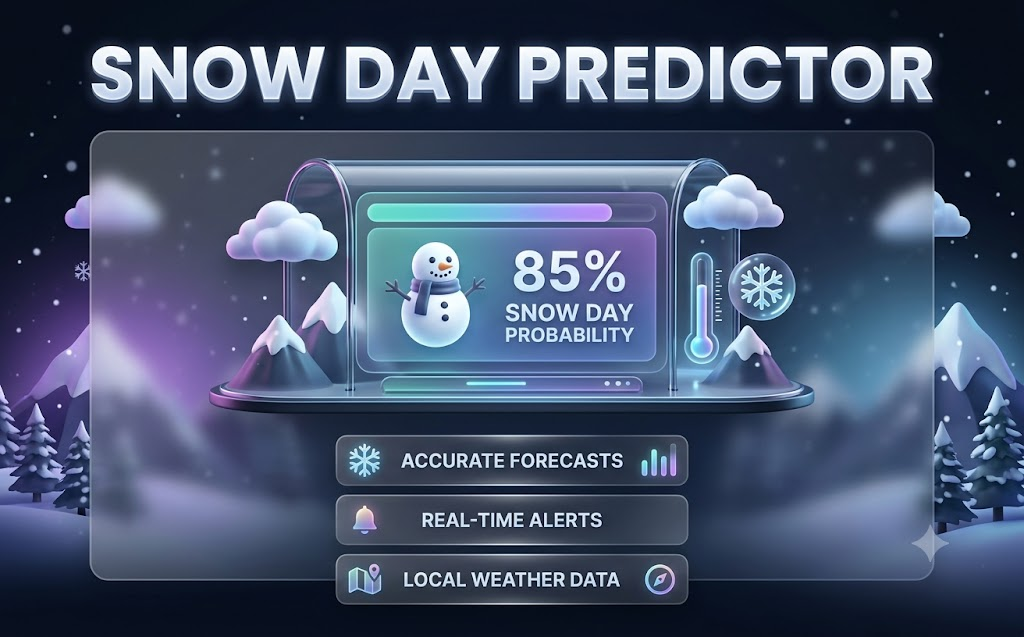
Snow days bring excitement to students, parents, and teachers alike. The possibility of waking up to a fresh blanket of snow and hearing that schools are closed creates a unique feeling of anticipation. Today, technology has made it easier to estimate the chances of a school closure through online forecasting tools. A Snow Day Predictor combines weather data, local conditions, and historical patterns to provide an estimate of whether schools may cancel classes. While it cannot guarantee an official decision, it gives families a helpful preview so they can prepare for the day ahead.
What Is a Snow Day Predictor?
A Snow Day Predictor is an online calculator or forecasting tool designed to estimate the likelihood of schools closing because of winter weather. It analyzes multiple weather-related factors, including snowfall, temperature, wind speed, and road conditions. Some advanced predictors also consider regional school policies and previous closure trends.
The main purpose of these tools is to provide an educated estimate before school officials announce their final decision. Although predictions are never perfect, they help students, parents, and teachers make plans for transportation, childcare, work schedules, and study time.
How a Snow Day Predictor Works
The technology behind a Snow Day Predictor relies on weather forecasting models and historical information. It gathers data from reliable meteorological services that continuously update weather conditions. These models estimate snowfall totals, freezing temperatures, ice accumulation, and wind chill values.
The predictor compares current weather forecasts with previous situations where schools were closed. Machine learning and statistical analysis may also improve prediction accuracy by recognizing patterns over time. Once the information is processed, the tool generates a percentage indicating the probability of a snow day.
Weather Factors That Affect Predictions
Several weather conditions influence whether schools remain open or close during winter storms. Heavy snowfall is usually the biggest factor because it makes roads dangerous and slows snow removal efforts. Ice accumulation often creates even greater hazards since slippery roads increase accident risks.
Temperature also plays an important role. Extremely low temperatures combined with strong winds can produce dangerous wind chills that threaten student safety. Visibility caused by blowing snow or blizzard conditions may also lead school districts to cancel classes even if snowfall totals are moderate.
Why Schools Close During Snowstorms
School administrators prioritize student and staff safety when deciding whether to cancel classes. Snow-covered roads, icy sidewalks, and reduced visibility can make traveling dangerous for buses, drivers, and pedestrians. Rural districts often face additional challenges because roads may remain unplowed longer.
Many districts inspect road conditions early in the morning before making a final decision. Officials also consult weather experts, transportation departments, and emergency services. A Snow Day Predictor attempts to estimate these decisions using similar weather information, but school leaders always have the final authority.
Benefits of Using a Snow Day Predictor
One major advantage of using a Snow Day Predictor is convenience. Families can begin preparing the evening before instead of waiting until early morning announcements. Parents may arrange childcare or adjust work schedules if the forecast indicates a high chance of school closure.
Students also appreciate knowing the likelihood of a snow day. They can complete homework early, charge electronic devices, and prepare for possible online learning if their school switches to virtual classes. Teachers benefit as well by planning lesson adjustments when severe weather is expected.
Accuracy of Snow Day Predictions
Although Snow Day Predictor tools use advanced forecasting methods, they cannot guarantee correct results every time. Weather conditions often change rapidly overnight, affecting snowfall amounts and road safety. Small differences in temperature can determine whether precipitation falls as rain, sleet, or snow.
School districts also have different policies regarding closures. One district may cancel classes after three inches of snow, while another remains open despite heavier snowfall. Because of these differences, prediction percentages should always be viewed as estimates rather than official announcements.
Common Features Found in Prediction Tools
Most Snow Day Predictor websites offer user-friendly interfaces that require only a few pieces of information. Users typically enter their location, school district, expected snowfall, and current weather conditions. Some tools automatically retrieve weather forecasts based on the provided location.
Many predictors display a percentage indicating the chance of a snow day. Others provide additional weather details such as temperature forecasts, wind speeds, snowfall totals, and ice risk. Some advanced versions even update predictions throughout the day as new weather information becomes available.
How Parents Can Use Predictions Wisely
Parents should treat Snow Day Predictor results as planning tools instead of guarantees. If the prediction shows a high chance of closure, it is wise to prepare children’s winter clothing, arrange transportation alternatives, and monitor official announcements from the school district.
Checking local weather reports alongside the prediction provides a more complete picture. Parents should also ensure emergency supplies, food, medications, and heating systems are ready during major winter storms. Preparation reduces stress regardless of whether schools eventually close.
How Students Benefit from Snow Day Forecasts
Students often check Snow Day Predictor tools with excitement during the winter season. While hoping for a day off, they can also use the forecast responsibly by finishing assignments and organizing study materials before bedtime.
If schools remain open despite snowy weather, students are already prepared. If classes are canceled, they can safely enjoy the day without worrying about unfinished homework. Responsible planning helps students balance fun with academic responsibilities during winter weather.
Limitations Every User Should Understand
No forecasting system can predict every weather event perfectly. Storm tracks may shift unexpectedly, causing snowfall totals to increase or decrease significantly. Road crews may clear streets faster than expected, allowing schools to open safely despite heavy overnight snow.
Local decisions also depend on factors that weather models cannot fully measure. Bus driver availability, power outages, flooding from melting snow, and individual district policies all influence final closure decisions. These variables explain why predictions sometimes differ from official announcements.
Tips for Improving Prediction Reliability
Users can improve the usefulness of a Snow Day Predictor by entering accurate location information and checking updated forecasts regularly. Weather models improve as storms approach, making predictions more reliable within twenty-four hours of the expected snowfall.
It is also helpful to compare multiple weather sources instead of relying on only one predictor. Following local meteorologists and official school communication channels provides additional confidence. Combining several trusted sources creates a better understanding of potential winter weather impacts.
Future of Snow Day Prediction Technology
Prediction technology continues to improve through artificial intelligence and increasingly accurate weather models. Modern forecasting systems process enormous amounts of atmospheric data in real time, producing better snowfall estimates than older methods. Machine learning also identifies patterns that help refine prediction accuracy.
Future Snow Day Predictor platforms may integrate live road condition reports, traffic information, satellite imagery, and real-time school transportation updates. These improvements could provide even more personalized and reliable forecasts for individual communities across different climates.
Conclusion
A Snow Day Predictor has become a valuable planning tool for families, students, teachers, and school administrators during the winter season. By analyzing weather forecasts, historical trends, and local conditions, it estimates the likelihood of school closures before official announcements are made. Although no predictor can promise complete accuracy, it offers useful guidance that helps people prepare for changing weather conditions.
The best approach is to use a Snow Day Predictor alongside official school notifications and trusted weather reports. Combining these resources allows families to make informed decisions while staying safe during winter storms. With improving technology and better forecasting models, snow day predictions will continue becoming more accurate, making winter planning easier and more dependable for everyone.